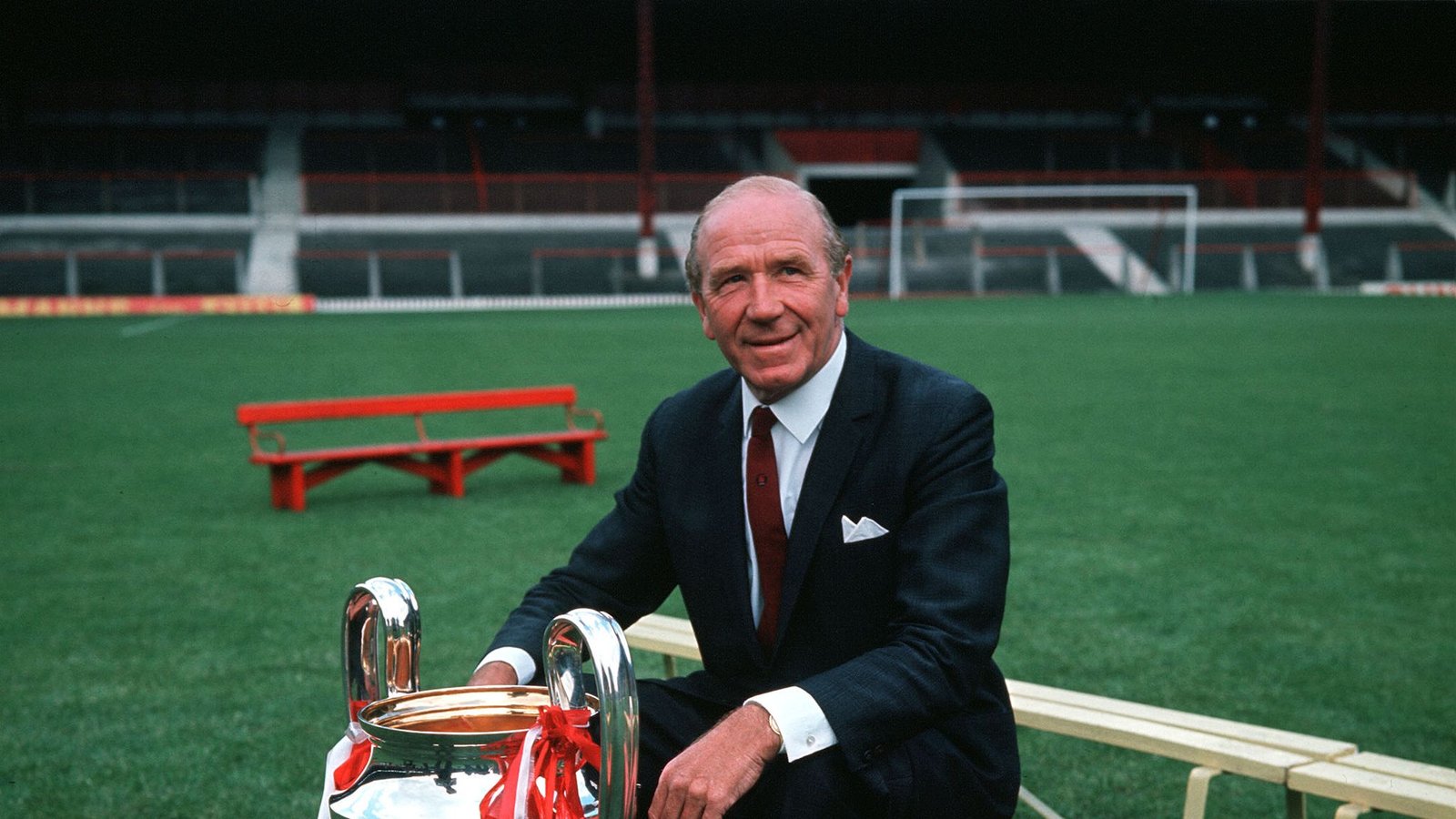
Early Life and Career
Matt Busby was born in 1909 in the small town of Orbiston, Scotland. Growing up in a working-class environment, his early life was marked by the challenges of the post-World War I era, but it was also during this time that he developed a fervent interest in football. His passion for the sport was evident from a young age, as he played for local teams while honing his skills in the streets of his neighborhood.
After his family relocated to Manchester, Busby’s connection to football deepened. He joined the local amateur football club, where he showcased his talent as a forward. His dedication and skill did not go unnoticed, and soon after, he was signed by Manchester City, where he began his professional career. Although injuries plagued his playing days, limiting his time on the field, Busby’s experiences during this period were crucial in shaping his understanding of the game.
While his playing career was rather modest, it served as a foundation for what was to come. After retiring from playing, Busby transitioned into coaching, drawing on his experiences to guide young players. His tenure at junior clubs provided valuable insights into player development and team strategy. Influenced by his experiences as both a player and a coach, Busby developed a coaching philosophy that emphasized teamwork and attacking football.
These formative years were instrumental in defining Matt Busby’s approach to the game. Little did he know, the principles he cultivated during this era would go on to influence not just his future successes at Manchester United but the broader landscape of football coaching as well. The values instilled in him during these early stages would lay the groundwork for his extraordinary legacy in the sport.
Rise to Prominence at Manchester United
Matt Busby, appointed as Manchester United’s manager in 1945, faced an extensive array of challenges upon his arrival at the club. In the aftermath of World War II, the landscape of English football was undergoing significant transformation, and so were the fortunes of Manchester United. Initially struggling with limited resources and an inconsistent team, Busby recognized the necessity for a structured approach that could revitalize the club.
His vision encompassed not only the immediate results but also long-term development, where nurturing young talent became paramount. The establishment of the ‘Busby Babes’ became a defining characteristic of his strategy, emphasizing youth advancement and skillful football. This approach fostered an environment that encouraged exciting playing styles while also enhancing the club’s reputation as a breeding ground for future stars.
In a relatively short span, Matt Busby led Manchester United to their first league title in the post-war era in 1952, proving that his methods could yield success. His innovative tactics and charismatic leadership garnered attention, as he molded the team into one that was celebrated not only for its achievements but also for its appealing style of play. Under his stewardship, the club thrived, reaching the FA Cup final and subsequently, the forefront of European football.
The success of Busby’s early managerial years laid a strong foundation for Manchester United, establishing a legacy that would endure. His ability to balance immediate requirements with the necessity for strategic growth positioned the club firmly amongst England’s elite. Matt Busby’s era was not merely about winning matches but about creating an identity that would resonate with fans and players alike for generations to come.
The Munich Air Disaster and Its Aftermath
The Munich Air Disaster occurred on February 6, 1958, and represents one of the darkest chapters in the history of Manchester United. On that fateful day, a plane carrying the team, who were returning from a European Cup match in Belgrade, crashed while attempting to take off from Munich. The tragedy unfolded as 23 souls were lost, including eight players, who were part of what many considered to be Matt Busby’s finest team. This incident not only devastated the club but also left Busby, the manager, grappling with profound personal and professional loss.
In the wake of the disaster, Matt Busby displayed remarkable strength and resilience. While mourning the loss of his players and the denizens of the club, he was also faced with the significant challenge of rebuilding a team that had been on the verge of greatness. The grief was palpable, yet Busby understood the necessity to honor their memory through action. With characteristic tenacity, he began the arduous task of reconstructing the squad from the ground up, focusing on integrating new talent while fostering the passion and spirit that defined Manchester United.
Busby’s efforts bore fruit as he adeptly harnessed young talents, like Bobby Charlton and Denis Law, who would go on to become club legends. His unyielding commitment to the footballing philosophy of youth development played a pivotal role in reviving the club’s fortunes. Within a few years, his tactical acumen and leadership led to a revival, culminating in winning the FA Cup in 1963 and ultimately the European Cup in 1968. This landmark victory served not only as a testament to his managerial prowess but also as a fitting tribute to the lives lost in Munich. Matt Busby’s enduring legacy thus became intricately interwoven with the heart and soul of Manchester United, reaffirming his status as a true icon of football.
Busby’s Lasting Impact and Legacy
Matt Busby is often recognized not only as a pivotal figure in Manchester United’s history but also as a transformative leader in football as a whole. His philosophy on youth development has left an indelible mark on the sport, emphasizing the importance of nurturing young talent. Under his guidance, the Manchester United youth academy became a model for clubs worldwide. This commitment to developing homegrown players has become a cornerstone of the club’s identity, influencing subsequent generations of managers and players.
Busby’s approach was characterized by a focus on holistic player development, which extended beyond mere athletic ability. He believed in fostering discipline, teamwork, and resilience, aspects that are essential in the world of competitive sports. His strategies laid the groundwork for future generations, encouraging clubs to invest in youth academies as a means of sustaining success. His legacy is perhaps most clearly illustrated by the emergence of legends like George Best, Bobby Charlton, and more recently, the likes of Ryan Giggs, who were all products of this foundational philosophy.
In addition to his contribution to player development, Busby possessed an exceptional talent for team management. He was known for his ability to unite diverse personalities into cohesive units that thrived on mutual respect and shared ambition. This management style not only yielded remarkable on-field success—most notably his triumphs in the FA Cup and European Cup—but also instilled a lasting culture of perseverance and determination within Manchester United.
Posthumously, Busby has been honored through various tributes, including the naming of stands at Old Trafford and induction into the international football hall of fame. His influence endures through the values he instilled in the club, ensuring that his legacy as a visionary manager and mentor will resonate for years to come.